Secrets of Longevity 1: Ages 40-60

 With my seventieth birthday just around the corner, I’ve decided to do a short series on longevity—a matter of some interest at my age!

The word Ayurveda is a compound of two words, ayush and veda. Veda means science and ayush means long and healthy life. So while Ayurveda offers treatment for all kinds of ailments, primacy is given to rasayana, the art of rejuvenation leading to longevity.

 Although rasayana commences at birth, special importance is given to the years from forty to sixty, known as parihani or ‘over the hill.’ These are the years when we first become aware of our ageing process. They are also the crucial years for laying a foundation for a healthy old age. Once the subsequent stage of life, jara or old age, begins in earnest, our dhatus or bodily tissues begin a process of diminution or deterioration. It’s no longer very easy to build our dhatus up, as they are more resistant. During the parihani years, we want to build healthy dhatus and set ourselves up well for our elder years. We do this by concentrating on diet, lifestyle and special herbs.

 Health in the parihani years

What happens to the body in the parhihani period?  For women, this is a very crucial time when we begin to notice hormonal changes and then, in the middle of the parihani years, go through our menopause. We may also begin to have changes in our bone health. Menopause may seem cataclysmic at the time, but many women report experiencing PMZ or post-menopausal zest, a term coined by anthropologist Margaret Mead. Now our energy is no longer drained by our menstrual cycle, we may experience a new lease of life.  Ayurvedic guidance on rasayana can help us make the most of this special time, when many of us feel more empowered to make a difference in the world.

For men, the changes, though not as dramatic, are no less important. By age forty, up to 40% of men begin to notice a decline in their sexual functioning, and this percentage increases throughout the parihani years. Men may also become aware of lower urinary tract symptoms, signaling an enlarging prostate. The issue of men’s sexual health in their older years is so important that there is a whole branch of Ayurveda, vajikarana, devoted to supporting virility for older men.

 Diet in the parihani years

Now that you are ‘over the hill,’ your metabolism begins to slow and it is all too easy to gain weight, especially with the hormonal changes taking place. You don’t have the same license to get away with living on beer, pizza and doughnuts that you had when you were in college. It’s time to focus on nutrient-dense foods such as fruits, vegetables, whole grains, legumes, nuts and seeds, fish, and organic dairy products. Not that you can’t have pizza once in a while, but don’t let the exception become the rule.

Another way that unwanted pounds can creep on and digestive power can slowly be eroded is eating your main meal at night. It may be challenging with your job but try to have your main meal at lunchtime most days and a lighter meal, like some soup or kichari, in the evening.

Lifestyle in the parihani years

During the years from 40-60, we often have stressful or challenging jobs, as we are at the top of our career. And all too often, our work is sedentary. Yet studies have suggested that prolonged sitting is an independent risk factor increasing all-cause mortality. You might want to try a standing desk or walking desk. Or at least break up your sitting time.

On a separate but related note, the exercise you take during your parihani years will have a major effect on your brain health in your elder years. Try to keep a good exercise plan including yoga and outdoor activities. While going to the gym may be helpful, in Ayurveda there is an emphasis on fresh air and sunlight as well as getting physical activity. And time spent in nature is a rasayana in its own right.

 Within reason, the better your exercise and fitness during this period of life, the better your brain and body will be during old age.

Another thing you want to consider during these decades is your use of substances that are harmful to your health. A half glass of wine on the weekend, or a toke or some cannabis edibles on special occasions may enhance your overall enjoyment of life. But daily or frequent use of alcohol, cannabis or recreational drugs will have a negative effect on your longevity and cognitive functioning. Releasing these injurious habits is key to a healthy old age and a long and enjoyable life.

Herbs in the parihani years

Ayurvedic herbs can provide tremendous support during your parihani time. If you are being troubled with blood sugar imbalances, menopause symptoms, or lower urinary tract issues like urgency or nocturnal urination, an Ayurvedic Doctor can create a herbal formula tailored to your needs. If erectile dysfunction or waning virility is a concern, a practitioner can start you on a vajikarana program. You might also want to look into doing panchakarma, the Ayurvedic cleansing process, which is a prelude to embarking on rasayana or rejuvenation. On a self-care basis, herbs such as turmeric, tulsi and triphala have wonderful antioxidant properties to support your midlife health.

 Remember to make slow, steady, sustainable changes. The Ayurvedic texts state that the bad habits should be abandoned gradually, and good habits adopted gradually. And when you find yourself slipping back into your old ways, don’t beat up on yourself—just pick yourself up and start over. Try to have a good diet and lifestyle in place to the best of your ability as you enter your elder years. Old people often become set in their ways, so your midlife years present a special opportunity to make supportive changes and growth.

 Alakananda Ma M.B., B.S. (Lond.) is an Ayurvedic Doctor (NAMA) and graduate of a top London medical school. She is co-founder of Alandi Ayurveda Clinic and Alandi Ayurveda Gurukula in Boulder Colorado, as well as a spiritual mother, teacher, flower essence maker and storyteller. Alakananda is a well known and highly respected practitioner in the Ayurveda community both nationally and internationally.

Enliven your holistic health! Visit Alakananda Ma in Alandi Ashram’s ayurvedic clinic to support the overall rejuvenation of your body, mind, and spirit. In-person and virtual appointments available. Book now!

The Rejuvenative Power of Gratitude

Photo by Sadananda at South Boulder Creek

During the Pandemic, we have been very aware of the fact that some people get COVID and are asymptomatic, some get mild illness and recover quickly, and some get serious or fatal illness. This raises a question that has been pondered since antiquity.

“It is to be observed, sir, that the persons taking wholesome food are both diseased and healthy and similarly in the case of unwholesome food. So how can good and bad effects be attributed to diet?” from Charak Samhita.

Obviously, when we are talking about a specific illness such as COVID, we have the opportunity to gain powerful protection through vaccination. That is something I encourage you to do, not only for your own sake, but for the greater good, to protect those more vulnerable to disease and to benefit society as a whole. At the same time, we still have the larger question—how can we support our overall resistance to all diseases? Is there something we can do that enhances our ability to avoid disease and maintain health?

In Ayurveda, that ‘something’ is rasayana, or rejuvenative therapy. Rasayana builds our bala or strength and our ojas—vigor or essence of vitality. Before the classical Ayurvedic texts speak about the treatment of specific diseases, they first discuss rasayana. In fact, rasayana is a discipline in its own right, seventh of the eight branches of Ayurveda. As the texts say, “From the rasayana treatment, one attains longevity, memory, intelligence, freedom from disorders, youthful age, excellence of luster, complexion and voice, oratory, optimum strength of physique and sense organs, respectability and brilliance.”

We can do rasayana to promote longevity, to improve cognitive functioning or even to enhance beauty. There are rasayana herbs to help us recover from specific illnesses and there are nourishing and rejuvenative foods that can be used on a daily basis. But while we have elaborate time-honoured herbal recipes such as Chyavanprash, for powerful rejuvenative effects, there are also methods of rasayana that do not involve taking any herbal medicines. One branch of adravya or non-herbal rejuvenative therapy is achara rasayana, behavioural rasayana. It is here that positive emotions like gratitude fit in.

So often, we focus on the things that are amiss in our lives, blaming ourselves or others for our misfortunes. When we cultivate gratitude, we take a wider view of our lives.

There’s nothing wrong with having a good kvetch when things in our lives are going awry, but at a certain point, we need to move on and focus on the positive. Positive emotions send healthy messages to our neuroendocrine system and help us to come into balance. Gratitude is a great antidote to neurotic emotions, or kleshas, like envy, jealousy and stinginess. Gratitude also inclines us to be more caring and helpful. If I am feeling gratitude that I have a place to live and food to eat, I will naturally think of all the people who are unhoused or food insecure and look for ways to help them.

 There are many methods and techniques to cultivate gratitude. Some people like to keep a gratitude journal, some prefer a gratitude jar, dropping a daily handwritten note about something you are grateful for into a glass jar. Some like to start the day by thinking about all the good things they are waking up to, others meditate at the end of the day, calling to mind the day’s blessings.

 To look a little deeper, should we be grateful only for certain things? Is it wise to pick and choose which things are blessings? In this regard, there is a Hasidic tale.

There was a farmer who had a very fine horse. One day his horse ran away. The neighbours came to commiserate the farmer on the loss of his horse. “Let’s see, let’s see,” replied the farmer. Sometime later, the horse returned with a herd of wild horses. The neigbours came to congratulate the farmer on the return of his horse and the addition of the new horses.  But he  just replied, “Let’s see, let’s see.” The farmer’s son was strong and athletic and enjoyed riding the wild horses. But one day, he fell off and broke his leg. The neighbours were worried and came to commiserate the farmer on his son’s accident. The farmer again replied, “Let’s see, let’s see.” Soon after, war broke out. The Russian army arrived to conscript all the young men of the village to fight in the war—most likely, never to return. Everyone was taken, except for the young man with the broken leg. Then the farmer said, “Now I know it was a good thing that my horse ran away.”

As this tale reminds us , the most profound way to gain the rejuvenative benefits of gratitude is to be grateful for everything that happens and to do our best to share our good fortune with others through generosity and helpfulness.

Alakananda Ma M.B., B.S. (Lond.) is an Ayurvedic Doctor (NAMA) and graduate of a top London medical school. She is co-founder of Alandi Ayurveda Clinic and Alandi Ayurveda Gurukula in Boulder Colorado, as well as a spiritual mother, teacher, flower essence maker and storyteller. Alakananda is a well known and highly respected practitioner in the Ayurveda community both nationally and internationally.

Enliven your holistic health! Visit Alakananda Ma in Alandi Ashram’s ayurvedic clinic to support the overall rejuvenation of your body, mind, and spirit. In-person and virtual appointments available. Book now!

Loss of Smell

From the milky smell of our mother on, life is full of fragrances that speak to us of where we are, who we are with, and how the seasons progress. How flat, dull and disorienting it is to be unable to smell these familiar scents!

In Western medicine, loss of smell is called anosmia, and a blunted or diminished sense of smell is hyposmia. And in Ayurveda we call loss of smell ghrananasha, and we note that it is often accompanied by arasajnata or loss of taste. These sense organ impairments are listed in the eighty diseases of vata in the Ayurvedic texts.

Basically, you can lose your sense of smell because there is something going on with your nasal mucosa or sinuses, or you can lose your sense of smell due to a neurological issue. In the latter case, there is nothing wrong with your nose, it’s your brain not reading the signals.

Thinking about your nose first, we’re all familiar with losing our sense of smell when we have a cold and stuffy nose, and we know that this affects our taste as well, because a lot of what we associate with the taste of food is actually its aroma. We’ll often lose our sense of smell with ‘flu as well, and with allergies or sinus infections. Usually these episodes are temporary, but we can certainly help our nose to be less stuffed up. By using a neti pot to irrigate the nose with lukewarm saline, we can clear a stuffy nose, help the sinuses to drain, and wash out bacteria, pollen, molds and allergens that are stuck on the lining of our nostrils. It’s best to use lukewarm distilled water and pure Himalayan salt or natural mineral salt, half a teaspoon to a cup of water. The water should feel comfortable and soothing; if it’s irritating it’s either not salty enough or too salty.

After irrigating the nose, it’s important to dry it by doing anulom vilom and forward bends to drain the water out of your nose.

You can also use a nasya oil like the one sold by Banyan Botanicals. Wait until your nose has dried from doing neti, and then instill five drops of nasya oil in each nostril. It’s best to do nasya in fish pose, with your head tilted backwards.

Unfortunately, if you have a severe sinus infection or long-term allergies, loss of smell and taste can become a chronic condition. There could also be perverted taste, where everything you eat tastes horrible. If your loss of smell doesn’t respond to neti and generic nasya, it’s best to see an Ayurvedic Practitioner to get a special nasya and some custom herbal remedies to nip the condition in the bud before it becomes chronic.

Anosmia has been in the news a lot of late, since it is a signature symptom of COVID. But the type of loss of smell COVID patients experience is completely different from what you get with a cold and stuffy nose. SARSCoVi2 is what we call a neurotropic virus, meaning that it likes to attack the nervous system. And after the virus attaches to the nasal mucosa, it doesn’t have far to travel to the base of the brain, where the olfactory bulb is located, the place where your body reads the smell signals. With COVID, loss of smell and taste is a neurological problem. As such, it’s much harder to tackle. Some people get a more transitory loss of smell and taste, while for others it can be persistent and seems to reflect long term damage to the olfactory bulb. We often take our sense of smell for granted, but if you can’t smell smoke when you need to, your life may be in danger. If you can’t smell or taste food, you may lose your appetite and suffer unwanted weight loss. And life is full of so many aromas, from roses to fallen leaves, that are evocative and pleasurable, as well as stinks that signal something we need to stay away from or remove from our environment.

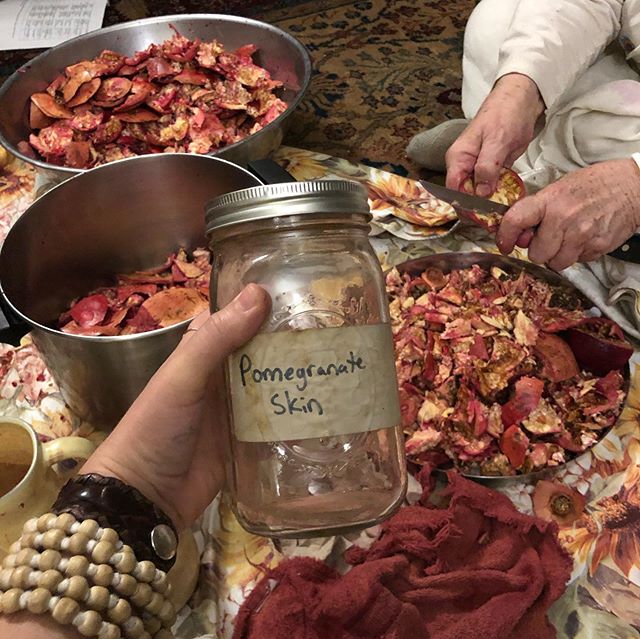
For intractable loss of taste, Ayurvedic texts recommend doing mouthwash with pomegranate juice with a pinch of rock salt and a teaspoon of honey, holding it in the mouth for as long as possible. It might be worth trying, as it is said to cure even incurable loss of taste. For loss of smell, we consider two factors. First, we want to get the viruses out of the olfactory system. Long COVID with persistent symptoms is very probably due to the virus persisting in the body. And secondly, we want to improve the function of the olfactory system by improving dopamine levels.  Nasya is the most direct route to accomplish both these ends, so we have created a special nasya for people with COVID-related loss of smell and taste. In addition, we give herbs to take orally that are nervine and antiviral. Don’t delay if you have lost your sense of taste and smell; seek Ayurvedic treatment right away.  the longer it goes untreated, the worse the potential damage.

 As the brain has great power to heal itself, we also suggest doing sensory rehab by smelling a set of essential oils every day while telling yourself, “This is rose, this is orange, this is pine” etc. Recall the smell in your memory as you do this. And as ghrananasha and arasajnata are defined as vata conditions, take a vata-soothing diet. Eat warm, soupy, well cooked foods like soups, dals and kicharis. Make sure you get plenty of essential fatty acids by eating healthy oils like ghee, olive oil and avocadoes.

If you have lost your appetite due to not being able to taste your food, take a quarter to half a  teaspoon of agni kindler five minutes before meals. You can make a batch and keep it in the fridge.

To make ½ cup agni kindler, grate ¼ cup fresh ginger and ¼ cup fresh turmeric. Squeeze on juice of ½ a lime or lemon and add ½ tsp salt.

You can also support your appetite by drinking a tea made from cumin, coriander and fennel. Using whole seeds, add 1/3 t of each to a cup of water and boil until the seeds sink. Strain and drink. You can make a3-4 cup batch for the day and drink it throughout the day.


Neurological loss of smell doesn’t only happen in COVID. It can also be part of neurodegenerative diseases such as Parkinson’s and Alzheimer’s Disease, as well as Multiple Sclerosis and ALS. In fact, loss of smell may be the first symptom of Parkinson’s, years before the characteristic motor symptoms appear. Similarly, in the case of Alzheimer’s, loss of smell may be an early warning symptom. If you look up Parkinson’s Disease on Doctor Google, you will learn that mucuna pruriens, Kapu Kacchu, helps endogenous dopamine production. Please don’t just order a bag of this herb, because you may not know the best way to use it. We don’t recommend using herbs as if they were drugs. An Ayurvedic Practitioner will create you a custom formula, special nasya, and an entire regimen to support your best health. A herb isn’t ‘Ayurvedic’ because it comes from India; it is Ayurvedic when used as part of a holistic Ayurvedic regimen and tailored for your constitution. Don’t self-treat for a serious condition, seek expert help.


As noted by Shakespeare, diminished taste is also a part of the normal ageing process.

“Last scene of all,

That ends this strange eventful history,

Is second childishness and mere oblivion;

Sans teeth, sans eyes, sans taste, sans everything.”

Unfortunately, there is no equivalent of the hearing aid for the sense of taste. Support the health of your sense organs by eating colourful fruits and vegetables every day and taking regular exercise and fresh air. The elder years are the vata time of life, so follow a vata soothing diet, eating broths, soups, dals and kicharis. And oil your body at least once a week with Ashwagandha-Bala Tailam or the oil your practitioner recommends for you.

Please care for your vata at every stage of your life so you can continue to enjoy the fragrance of life for many years to come. 

Alakananda Ma M.B., B.S. (Lond.) is an Ayurvedic Doctor (NAMA) and graduate of a top London medical school. She is co-founder of Alandi Ayurveda Clinic and Alandi Ayurveda Gurukula in Boulder Colorado, as well as a spiritual mother, teacher, flower essence maker and storyteller. Alakananda is a well known and highly respected practitioner in the Ayurveda community both nationally and internationally.

Enliven your holistic health! Visit Alakananda Ma in Alandi Ashram’s ayurvedic clinic to support the overall rejuvenation of your body, mind, and spirit. In-person and virtual appointments available. Book now!

Celiac Sprue | Grahani Roga, Part One

Celiac disease (CD) is an auto-immune gluten sensitive enteropathy and is an important cause of grahani roga or sprue in all parts of the world and among people of all ages. Continuing our discussion of anna vaha srotas, in part one of this article we will consider the epidemiology, pathology and diagnosis of celiac sprue and in part two, next month, we will look at case histories and treatment.

Read More

Heart Disease

Throughout the developed world, coronary artery disease is the foremost cause of morbidity and mortality, causing over half a million deaths a year in the US alone. To a great extent, the disease is lifestyle-related, and results from a kapha-provoking sedentary lifestyle, coupled with excess consumption of fatty foods, especially trans-fats, and insufficient intake of fruits and vegetables. Pitta factors such as stress and overwork are also known to play a major role.

Read More

Acid Indigestion | Amlapitta

Amlapitta, known as acid indigestion or dyspepsia, is a common and widespread condition of painful or difficult digestion, often accompanied by symptoms such as nausea, heartburn, bloating, belching and stomach discomfort. Madhava describes amlapitta as, "The disease in which the patient has indigestion, exhaustion without any exertion, nausea, belching with bitter or sour taste, feeling of heaviness in the body, burning sensation in the chest and throat and loss of appetite.”

Read More